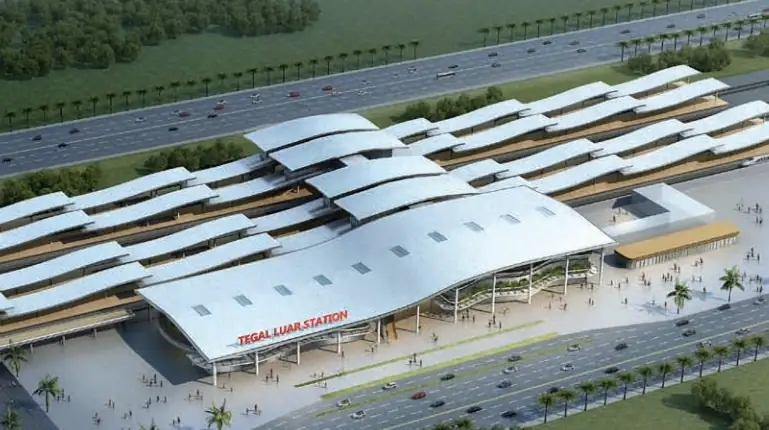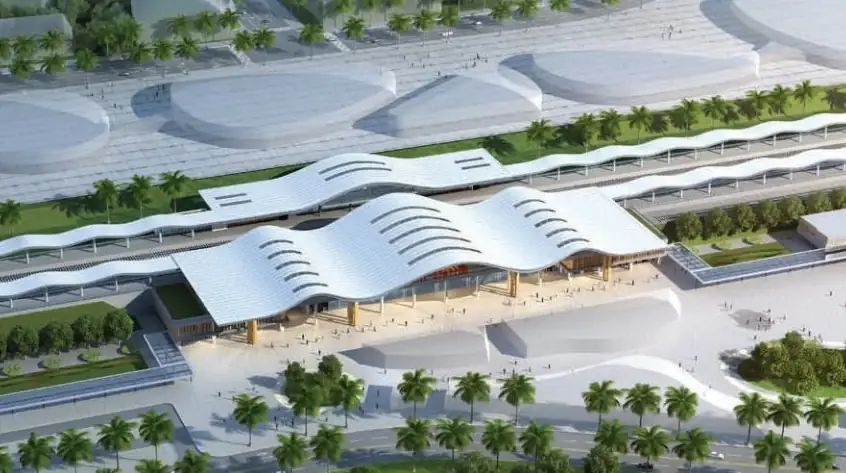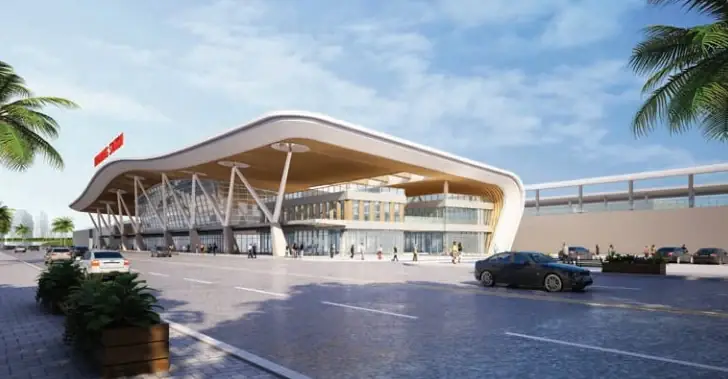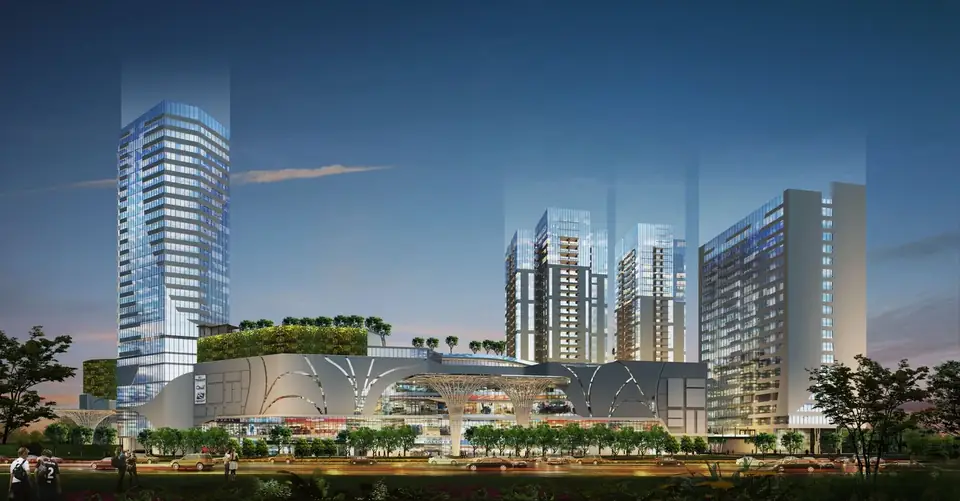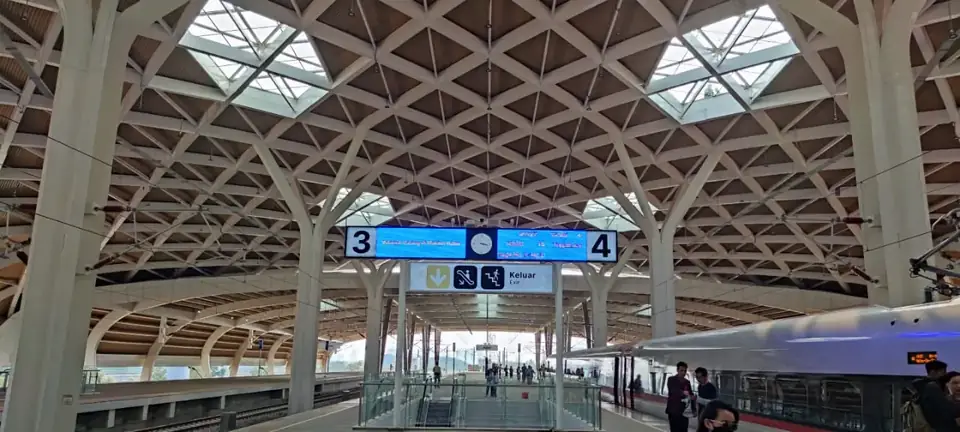
Stadin engineered the structures of four Jakarta–Bandung high-speed rail stations: Halim, Karawang, Walini and Tegalluar. All four are public buildings with spacious passenger halls and heavy foot traffic. This article sums up the facts of each station from Stadin's project data, then looks at the structural challenges that long-span station buildings usually bring.
The Jakarta–Bandung high-speed line at a glance
The Jakarta–Bandung high-speed line is 142.3 km long and began carrying passengers in October 2023. Trains are designed to run at 350 km/h, cutting a journey of about three hours to roughly 45 minutes. About 82.7 km of the line is elevated and 16.8 km runs through tunnels.
News reports from October 2021 said the operating plan for the line covered four stations: Halim, Karawang, Padalarang and Tegalluar. Walini was not part of that operating plan, even though its structural design had been completed.
Four high-speed rail stations engineered by Stadin
The figures below come from Stadin's project data. All four stations are recorded with a design year of 2019.
| Station | Location | Floor area | Storeys | Foundation |
|---|---|---|---|---|
| Halim | Jakarta | 57,000 m² | not recorded | not recorded |
| Karawang | Karawang | 22,000 m² | 3 | driven and bored piles |
| Walini | West Java | 24,000 m² | 2 | driven and bored piles |
| Tegalluar | Bandung | 60,000 m² | 3 | driven and bored piles |
A few things stand out:
- Tegalluar is the largest, at about 60,000 m², slightly larger than Halim station in Jakarta at about 57,000 m².
- Together the four stations cover about 163,000 m², roughly 23 times the area of a standard 105 × 68 m football pitch.
- Three stations combine driven piles and bored piles. Using two pile types in one building is common on large projects.
- The buildings are low but wide. With 2–3 storeys, the challenge lies in spans and floor area rather than height.
The structural challenge of high-speed rail stations: open space with few columns
A station is not an office building. Passengers need to move smoothly from the entrance to ticketing, waiting areas and the platforms. Closely spaced columns block sightlines and slow people down, so station halls and roofs are usually designed with long spans.
Long spans have technical consequences:
- Beams and roof trusses get larger and heavier, so each column and its foundation carries more load.
- Deflection and vibration must be controlled. A floor that spans far has to be stiff enough not to feel bouncy when crowds walk across it.
- Connections and details matter. In long-span roof framing, connection details affect both strength and how easily the structure can be erected on site.
- Earthquake and wind loads still apply, because a large roof catches strong wind forces and public buildings must meet seismic requirements.
The chosen solution (steel, concrete or a mix) depends on the architectural form, schedule, construction method and the soil at each site. There is no single recipe for every station.
Tip: For long-span public buildings such as stations, terminals or halls, bring in the structural engineer at the architectural concept stage. Agreeing on column positions early usually avoids costly redesign later.
Why combine driven piles and bored piles?
At Karawang, Walini and Tegalluar, the foundations use both driven piles and bored piles. In general, reasons for using two pile types on one project include:
- Different soil conditions across one site. A large station site may not have uniform soil layers.
- Different loads. Columns carrying a long-span roof can take far more load than other parts of the building.
- Construction constraints. Piling vibration and noise, equipment access and the work schedule all influence the pile type in each zone.
The final choice is always based on soil investigation data and calculation, not habit. We compare the two pile types in bored piles vs driven piles, and cover the soil investigation side in CPT vs SPT.
Lessons for other public buildings
Designing transport buildings offers lessons that also apply to malls, terminals, sports halls and convention buildings:
- Define the column-free space you need early, because it drives the structural system.
- Make sure there is enough soil data for a large site, not just a few test points.
- Plan the structure together with the construction method, especially for large roof elements.
- Design for comfort as well as strength: floor vibration and deflection matter to users.
Beyond these four stations, Stadin has also engineered other transport projects, such as 20 TransJakarta bus stops and the Ventura – MRT Fatmawati connecting bridge. See the full list under transport infrastructure projects.
Conclusion
The four Jakarta–Bandung high-speed rail stations engineered by Stadin cover about 163,000 m² in total, with Tegalluar the largest. The main challenge is not height but open, long-span space and foundations matched to the soil at each site.
Planning a station, terminal or bridge? Learn more about Stadin's bridge and infrastructure structural design.
This article provides general information. Every project still needs to be analysed and calculated by a competent structural or geotechnical engineer, in line with the applicable SNI codes and regulations.
Sources
- New 'Whoosh' high-speed line launched in Indonesia (Rail Technology Magazine, 2023)
- Batalkan Walini, Kereta Cepat Jakarta-Bandung Hanya Ada Empat Stasiun (Katadata, 2021)
- Data proyek: company profile PT. Stadin Strukturindo Konsultan (2026)